Lucy Blackman's Unique Experience of Autism
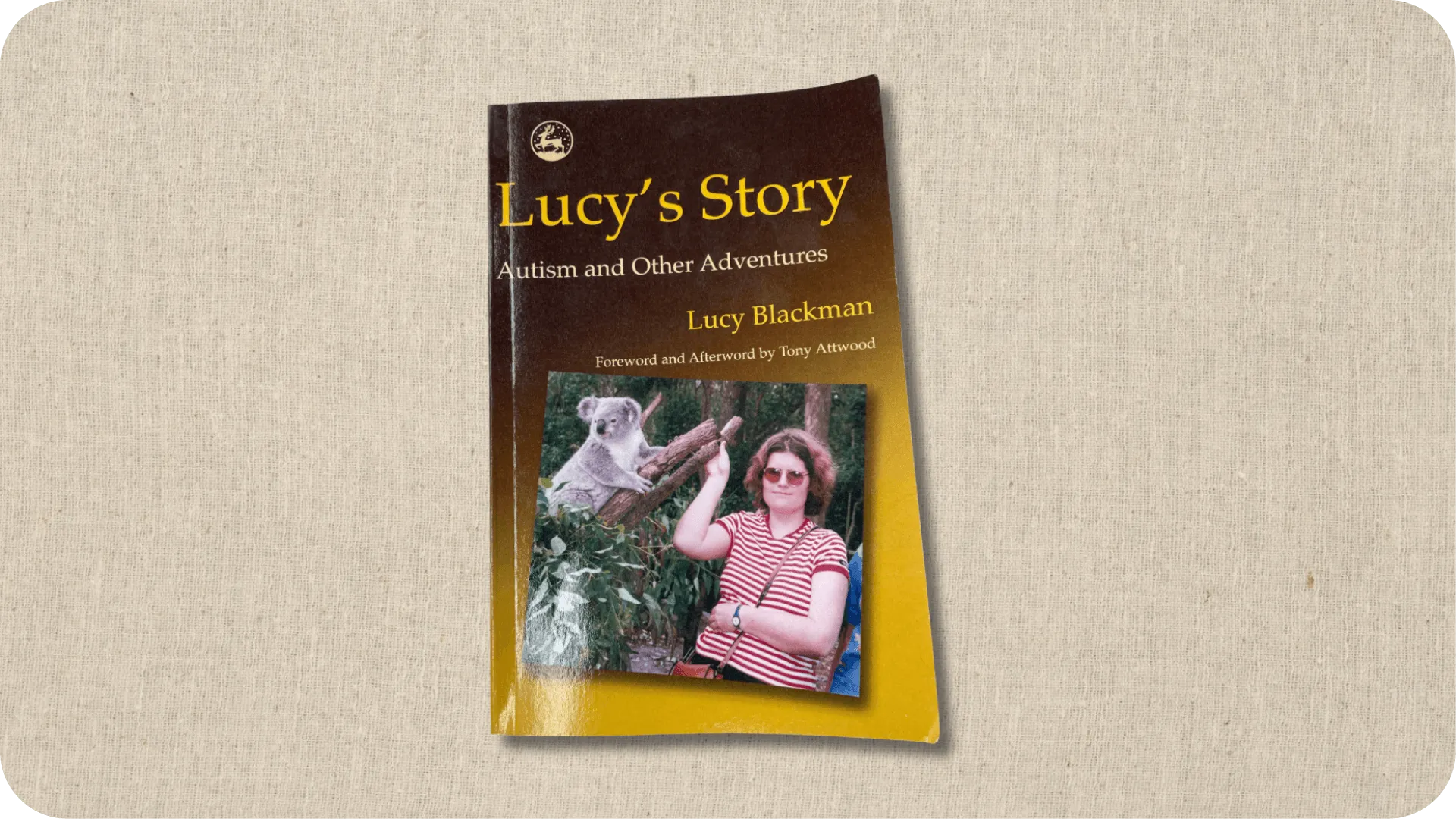
Lucy’s story is particularly interesting because her only reliable senses that work more or less ‘normally’ are taste and smell. Yet despite a chaotic sensory environment, which prevented her learning to speak, she learned to read at an early age without instruction. Then she read her older sister’s text books and assimilated their maths exercises while everyone thought she had no awareness nor understanding of anything. It was a shock to her family when they realised just what Lucy did know and how intelligent she is. Lucy was 14 by this time. Once she could communicate, Lucy said that she wanted to attend mainstream school. The authorities were able to make this happen, and Lucy successfully completed the last four years of secondary education and qualified for university.
Lucy Blackman’s Sensory Challenges
Lucy’s autism is essentially sensory, specifically hearing, vision, touch and body awareness. Lucy went to the US for Berard Auditory Integration Training (AIT) and this did change her sensory profile quite significantly, while still leaving her severely autistic. So first we will describe the effects of her sensory issues before this training and then discuss how AIT changed this profile.
Lucy’s hearing as a child was fragmented, distorted, and inconsistent. Fragmented because she could not hear some normal speech sounds; distorted in that what was said to her would arrive in a jumbled up order, and inconsistent in that different sounds fluctuated in volume. Lucy continuously heard the traffic sounds in front of her house and sometimes these drowned out other sounds and sometimes they didn’t. This isn’t just talking about a heavy truck going past, which can be a problem for anyone who struggles to separate foreground from background noise, but a large factor in this was the inconsistency of her hearing.
Given these problems with hearing, it is no wonder that Lucy did not learn to speak and her attempts at copying spoken words were unintelligible because she did not hear all the sounds. Lucy did manage to attach meaning to some words, but often this meaning was very idiosyncratic and related to her emotion during a particular event. For the most part, she did not recognise that talking and words were for communication. So she communicated by behaviour: leading people to what she wanted and temper tantrums, along with socially unacceptable behaviour when she was particularly fed up.
Lucy’s vision was often fragmented, especially when she got emotional, and she relied on peripheral perception because her brain processed what was off to the side better than what was straight in front of her. This meant that she did not gain any depth perception and this meant certain scenes with clear and sharp shadows were very scary because she could not process what they were. Lucy found walking downhill difficult because her vision was not in sync with her movement. She felt her foot touch the ground, while her vision told her there was still a bit to go.
Learning to Read Despite Visual Processing Issues
However, despite these issues with her vision, Lucy learned to read first from ‘Sesame Street’ and then from looking at books and papers. But this language was visual and based on words and pictures. For her, it did not relate to real life . For example, she did not connect the word ‘ball’ and the accompanying picture with the large round huggable plastic object of that name. Through reading she gained a lot of knowledge, though even learning this was very idiosyncratic. She would scan her sister’s textbooks and then tear them up. Through peripheral vision, she would watch her sisters doing their homework and would scan the material. Later, when her mother forced Lucy to go on long walks, Lucy spent this time processing all this material into a coherent whole - including the maths.
Lucy’s connection to her body was very poor. She had difficulty separating herself from other people and needed to mirror people to achieve some action. She was not able to tell where her body was in space and this led to a strange gait when running and walking. Deep pressure helped her feel connected to her own body as did movement. Flapping, running while throwing her head from side to side helped her body and senses feel more integrated.
Facilitated Communication and the Vital Role of Physical Support
When Lucy learned to communicate (at the age of 14) via pressing letters on a keypad, she wanted to show off her visual language and her knowledge to demonstrate that she was intelligent. It took a while for her to connect the words she typed with the act of communicating her wants, needs, and feelings, and to everyday life. The first time she did this was to tell her mother she did not want to go to respite care during the school holidays. Her mother immediately cancelled the booking and Lucy realised that typing was far more effective than temper tantrums and being destructive.
‘Facilitated communication’ is controversial because the person’s hand or arm is supported. In addition, the person can often not type with anyone, but only with a few people. This has led to accusations that what is typed is not coming from the person typing but from the person supporting. Lucy makes it clear that this physical contact was vital to create the connection between her brain and body so that her finger could press the right key. Even with this, her hand tended to compulsively move to a different key and the support person had to learn to recognise and inhibit this. At mainstream school, her classmates were certain it was her own work. Sometimes her support person could not do the work, so it had to be Lucy’s work. This was vital to establish for her final school exams.
Overcoming Sensory Barriers in Education
Lucy is very intelligent and able to succeed at a wide range of academic subjects. Her cognition is affected by her autism only in so far as her sensory issues have impacted on her cognition. Some of this is positive in that she can read extremely quickly, but some is less positive in that she struggles to learn to order and has no idea (in the book) regarding interpersonal relationships.
Between school and university, Lucy was able to have Berard Auditory Integration Training. She hoped that this would enable her to speak and would cure a lot of her autism. But this was not to be. While this training certainly did improve Lucy’s hearing, vision, and body sensing, she is still severely autistic and cannot speak. In the book Lucy said that this auditory training caused her to loose her ability to write poetry, but in later writings she calls herself a poet, so it must have come back at a later date.
The impact on Lucy’s hearing was that she became able to hear words better. Until then, English appeared to have a lot of silent letters. During AIT, Lucy discovered this was not the case, but that she had not been able to hear a lot of normal speech sounds. Lucy found the impact on her vision processing and body awareness quite profound. She became able to see perspective and faces became more than just a few shadows. This made the world somewhat less scary and chaotic. Lucy’s walking became more natural and gradually she became able to type independently. This was certainly an improvement, but it did not have the hoped for impact.
Later on, Lucy discovered about Irlen Lenses. She is wearing them for the photo of her book cover. These helped Lucy a lot, but she does not cover them in detail in her book.
The Importance of Individualized Approaches
Lucy Blackman’s story is fascinating, but I wish to make it clear that while those autistic people who can write about their experiences can shed a light on what autism is, we have to remember that these autistic people are a small subset of autistic people as a whole. Most autistic people are not able to write books about their autistic experiences and indeed have no insights into their autism. We should also not assume from stories like this one, that all autistic people with non functional speech can learn to communicate via ‘facilitiated communication’ and similar techniques. This is not true. It all depends on the autism of the individual.
We should also remember that many autistic people struggle to translate their thoughts into words. Some can speak, but translating into writing is extremely difficult. Some struggle to ‘catch’ the words they need. This part of autism is little understood because it is so hard to express in words.